Fujino, Japan Residency 2026

Daichi ni Heiwa Are (大地に平和あれ)

Vikram Arora and Georgia Mulholland

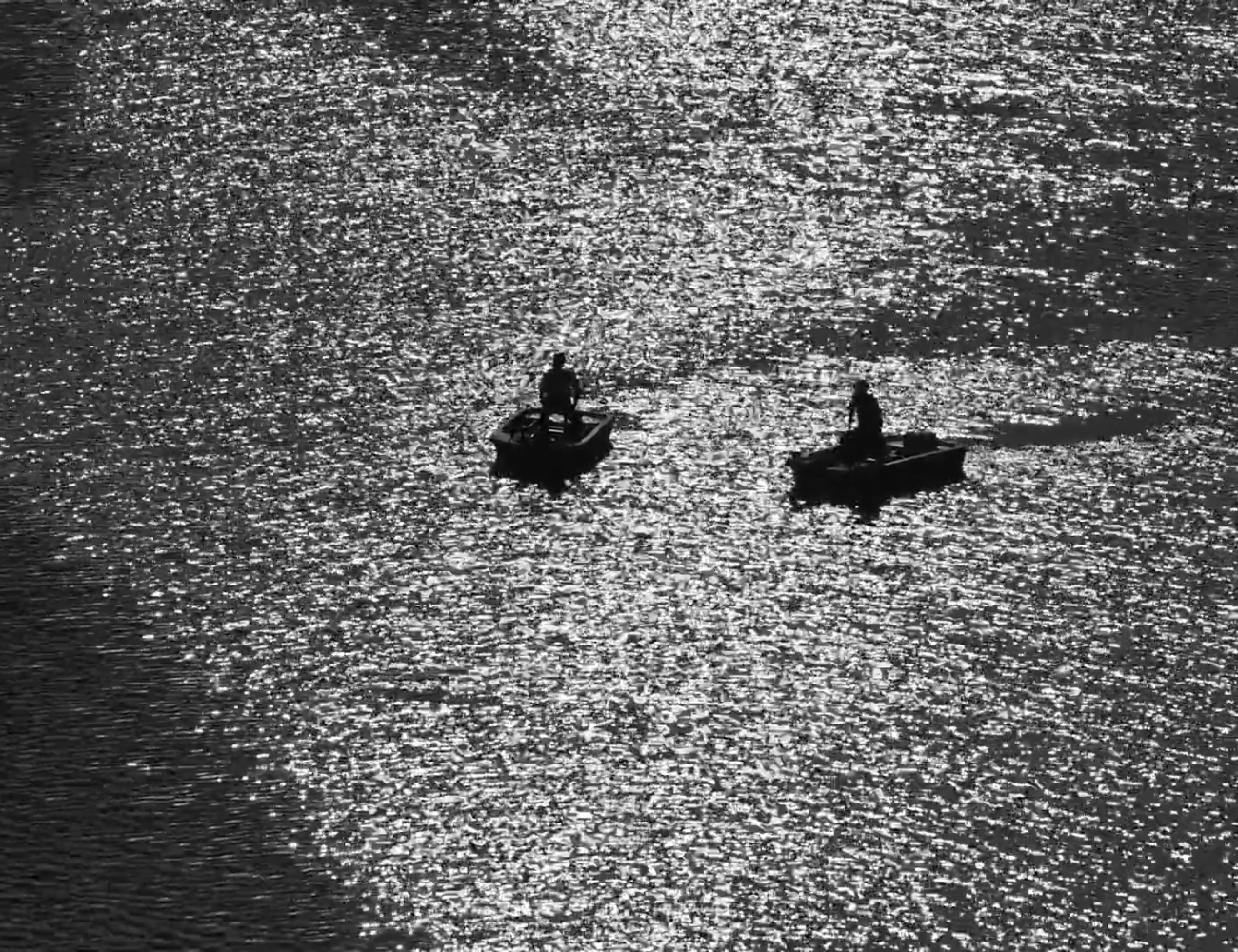
Video and Sound Installation

As the climate crisis continues to reshape landscapes and lives, we return to chant as a form of invocation and remembrance.

Drawing from the Shanti Path, this work transforms a prayer for peace into the Japanese language — not as translation alone, but as an offering to the land that temporarily holds us.

“Ōmu, ten ni heiwa are.
Sora ni heiwa are.
Daichi ni heiwa are.”

“Om, let there be peace in the heavens.
Let there be peace in the sky.
Let there be peace upon the Earth.”

Through voice, moving image, and soundscape, the work reflects on harmony between human presence and the natural world. The chant becomes both meditation and warning — a quiet call toward balance in a time of ecological uncertainty.

Carbon Bloom

Site-responsive project

Encroachment is a site-responsive project exploring the shifting relationship between human presence and natural reoccupation within Fujino’s satoyama landscape.

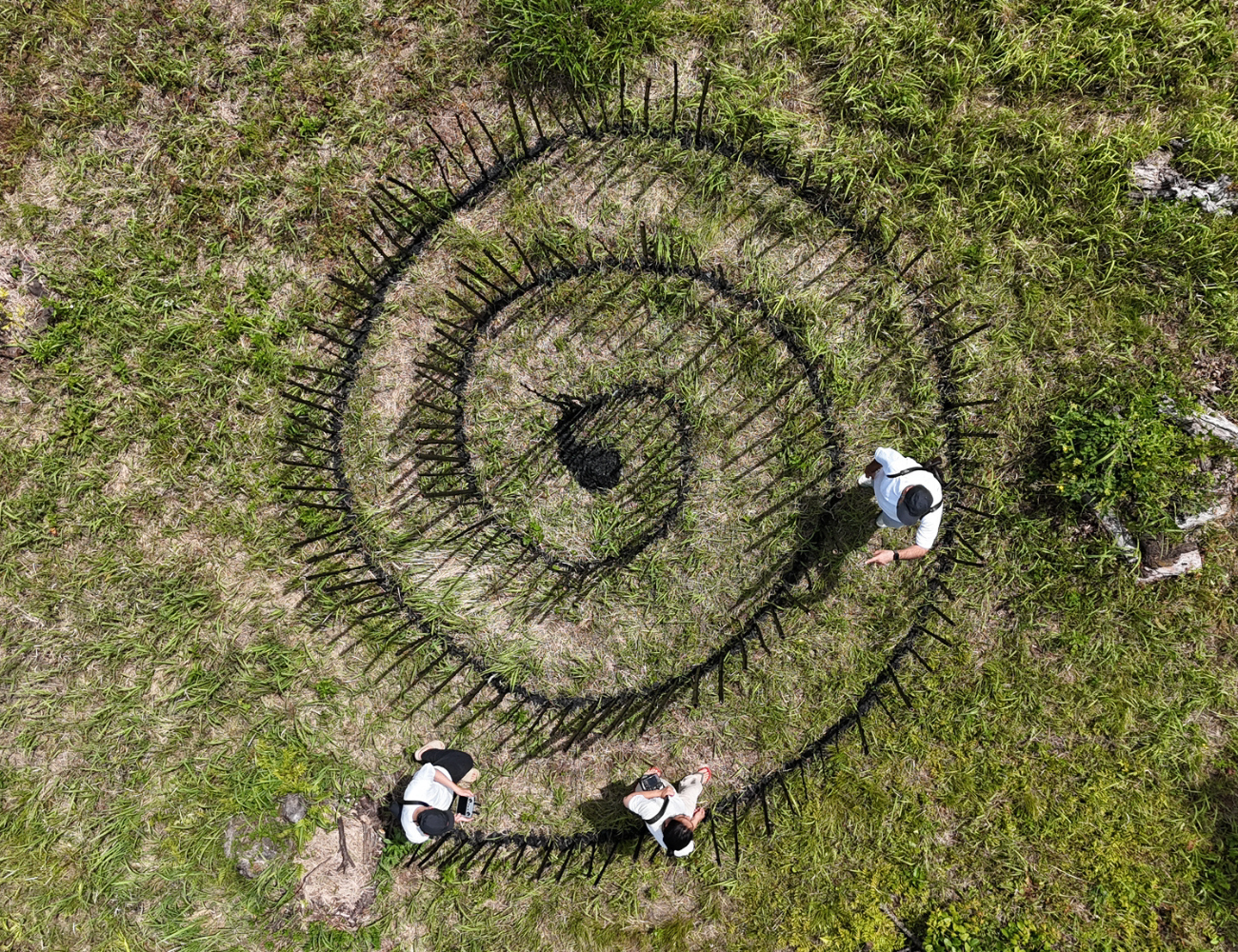
At its centre, Carbon Bloom is a spiral installation constructed from locally sourced bamboo, a material that embodies both ecological abundance and encroachment.

Bamboo forests in Fujino have increasingly spread into surrounding land, altering ecosystems and contributing to soil instability. Sourced through local forest management practices, the bamboo connects the artwork to existing cycles of charcoal production, reuse, decay, and regeneration.

Darkened with sumi ink and controlled surface burning, the bamboo evokes carbon transforming from an invisible atmospheric presence into visible form. The spiral draws from patterns of growth and regeneration found in nature and permaculture, suggesting expansion, accumulation, erosion, and return.

Emerging from the landscape like a dark organic trace, the installation invites viewers to consider nature as a living system in continual transformation.

Photos Credit: Rick Grehan

Someone Will Come

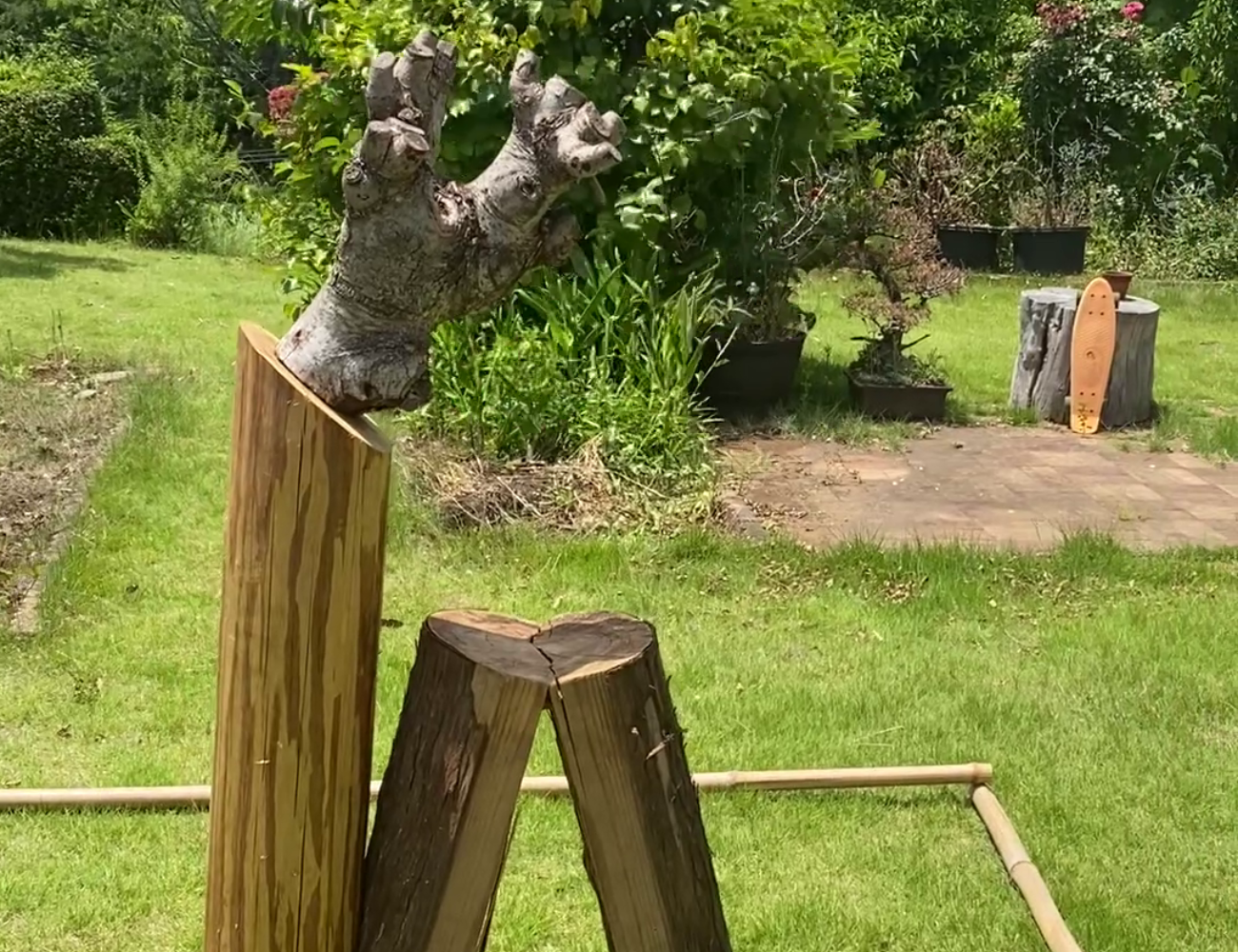
Cedar wood and other found wood

This work emerged from an encounter in Fujino with a missing child.

A young boy, no older than two or three, had wandered away while following his older sister to a nearby store. He stood quietly among strangers as we searched for his family and waited beside a small local police station. He did not cry. He seemed certain that someone would come for him.

Watching him stirred a personal memory of emotional distance and self-reliance — of learning, from a young age, not to wait too visibly for care. The calmness of the child felt less like fear and more like trust: the belief that even when lost, someone is searching for you.

Part of the installation is made from cedar, a material deeply tied to the surrounding mountains of Fujino. Large areas of cedar were planted across Japan after the war with hopes of growth and stability, yet many forests were later left unmanaged after the collapse of the domestic timber industry. Today, these dense plantations are associated with ecological imbalance and landslide vulnerability in parts of the region.

The child and the cedar begin to resemble one another: both shaped by care, abandonment, and silent endurance within the landscape.

Someone Will Come reflects on the fragile relationship between trust, abandonment, memory, and the hope of being found.